Posted on Leave a comment

10 things you didn’t know about Tiffany & Co.

T by Tiffany & co Anna Blachut

Late last October I was honored to be invited to discover The Tiffany T collection in the Tiffany & Co.’s Geneva boutique. The new Tiffany T collection features vibrantly colored inlaid stones— from turquoise, tiger’s eye, opal to black onyx. Each piece was breathtaking and the iconic T design was echoed throughout the rings, bracelets, earrings, and necklaces of the collection.

After this incredible experience, I wanted to share with you ten things interesting and little known facts about the incredible jewellery design brand Tiffany & Co.

Creativity, legacy and quality: Tiffany & Co., the world’s most iconic jeweler, was founded by two school friends Charles Lewis Tiffany and John B. Young in 1837 at 259 Broadway, New York. Initially they sold small fancy goods including stationary.

The distinctive Tiffany Blue color a patented Pantone 1837. The number is a references to the year of Tiffany’s foundation. It’s used for the Tiffany boxes, bags and all promotional materials. Tiffany’s blue color was inspired by the Empress Eugenie de Montijo (the wife of Napoleon III).

Did you know that Tiffany developed the silver standard for the USA? Back in 1851, Tiffany was the first American company to institute the 925/1000 sterling silver standard which was then adopted by the United States. To this day it is used as the silver standard. Talk about innovation.

That same year (1851), Tiffany & Co. started a long relationship with the watch house Patek Philippe located in Geneva, Switzerland. Indeed, Mr. Patek visited Tiffany’s in 1855, he left with an order for 129 watches.

Charles Lewis Tiffany, swiftly became known as “The King of Diamonds” in 1887 when he purchased one-third of the French Crown Jewels. That same year he acquired what is known today as The Tiffany Yellow Diamond. One of the largest yellow diamonds ever discovered. The 128.54 carat was acquired for $18,000. Worn last by Lady Gaga at the Oscars, it’s only ever been worn by two other women – Mary Whitehouse and Audrey Hepburn.

Audrey Hepburn wore it on the run up to the film release of Breakfast at Tiffany’s. The Yellow Diamond was set in a Ribbon Rosette necklace designed by Jean Schlumberger.

An American symbol of elegance and style, Tiffany basically invented the engagement ring. Introducing the Tiffany setting in 1886 it features a raised solitaire diamond with a six–prong “Tiffany Setting“. The cut is still the world’s most popular engagement ring. My personal favorite is the Princess cut.

There you have it, 10 facts about the luxury jewelry brand, Tiffany & Co. For more designer and luxury facts click here.

T by Tiffany & co Anna Blachut 1
Tiffany & co Anna Blachut
Anna Blachut at Tiffany & Co in Geneva
Tiffany blue box Anna Blachut
T by Tiffany & co Anna Blachut 3
Posted on Leave a comment

A Luxury Escape at Arosa Kulm Hotel

Arosa Kulm Hotel is a luxury, Swiss ski resort.

At the beginning of the month, we enjoyed the most wonderful, luxury escape in the Swiss Alps. I wanted to share my exceptional stay at the Arosa Kulm Hotel.

Arosa is a luxury ski resort in Switzerland, situated in the alpine resort village. The Arosa Kulm Hotel is nestled in the Schanfigg Valley, in the Swiss canton of Graubünden. A real winter wonderland, this breathtaking five-star hotel dates all the way back to 1882 and has the most fascinating backstory. It is the perfect setting for a snowy getaway like the one we enjoyed.

Upon arriving, I was struck by the fairytale nature of the hotel. We were warmly welcomed into the hotel and shown to the sprawling suite which we would call home for the next few days.

The Hotel

The hotel even features ski-in & ski-out access, Alpine Spa and 5 first-class restaurants (13, 14 and 15 Gault Millau points).

The Hotel Arosa Kulm is in fact steeped in wonderful history that dates back to even before 1882. It all began when the Arosa confectioner, Hans Hold, bought the house neighboring his farmhouse. It was in 1882 that the Arosa Kulm Hotel originated when Hans’ son, Thomas connected the two houses. Thus, transforming them into a 30-room hotel named the Kurhaus. In 1894, Thomas Hold passed away and the hotel was taken over by the chef, Mr. Scherrer who renames the hotel “Kulm”. Today the hotel stands proudly at the top of Arosa, now with 119 rooms with 207 beds and a stunning Alpin Spa. What’s more, each room in the hotel is furnished differently and tells its own story. Allowing guests to have a truly unique and memorable experience at the hotel.

The Location

Arosa itself has plenty of activities. So during our three-day stay, we took full advantage of all that this snowy ski resort had to offer, including a lovely squirrel trail. The Arosa Kulm Hotel staff even provided us with peanuts to attract squirrels. The Arosa squirrel path was amazingly scenic and we even saw a baby deer on the trail.

Our Room

The hotel suite reminded me of a James Bond film set, with rustic, chalet-chic finishings and huge bay windows that overlooked the Swiss Alps. It had a wonderful glamour and grandeur to it with a fantastic view of the snow-capped mountainside was spectacular.

The suite was classically designed in a Swiss chalet style with luxurious finishes. In addition to the large bedroom and ensuite, marble bathroom, we had a spacious living room area and dressing room. The bedroom had the most comfortable pillows I’ve ever slept on and I was so pleased that the bathroom had both a shower and bath (I am a huge fan of bubble baths!). The cherry on top was that our room had a huge south-facing balcony with lovely wooden deck chairs so we could soak up the sunshine and fresh alpine air.

The Food

The Arosa Kulm Hotel is known as a gourmet destination, with 5 different restaurants we were spoilt for choice.

The first night we enjoyed the delicious, locally sourced dishes from Chef Florian Mainzger at the Mutanella restaurant.

Before dinner on the second night, we cozied up by the fire and enjoyed a little pre-dinner appetitive. I sipped my divinely made expresso martini at the K.Lounge and could not help but be reminded again of the glamour of a 007 movie set.

Then we headed down to try the famous Thai restaurant: Ahaan Thai. This restaurant also has the most fabulous backstory to it In the 1930s the Thai King Bhumibol Adulyadej learned to ski in Arosa and even stayed at the Arosa Kulm Hotel itself. Today, Chef Tussanee and her team have been flown in from Bangkok and bring their authentic expertise to each dish.

The Alpine Spa

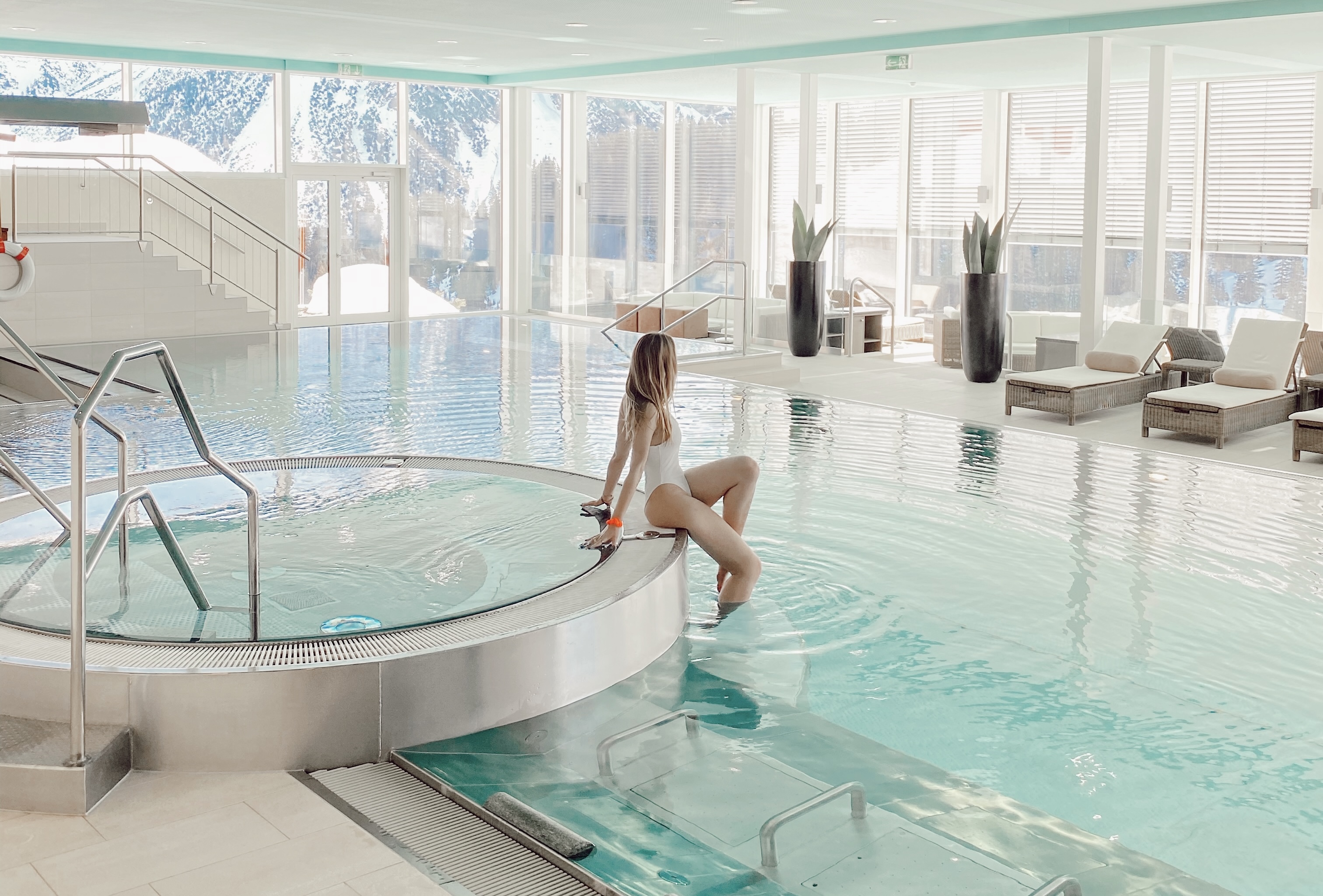
The Arosa Kulm Alpine Spa offers relaxation and the most breathtaking view of the Swiss alps. The spa is entirely made of glass windows and you can see out onto the crystal white snow slopes. With 1,200 square meters of wellness and relaxation, the heated area and indoor pool have a calm serenity to them. Indeed, this is because the concept of the Arosa Kulm spa was based on the earliest power symbols from traditional European natural healing. Even the color of the local blue-green Andeer granite in the spa forms the energetic core.

The philosophy is rooted in a source of balance and harmony embodied in our tree of life which represents vital energy and a link to the subconscious. I even practiced some meditation in the quiet room. I felt deeply recharged in both my mind and body. There was a truly calming effect that the Spa itself had on me.

This luxury escape in snowy Arosa is exactly what I needed to unwind. The food, hotel staff and service were all exceptional. The hotel staff was incredibly professional yet so warm, kind and friendly. Everyone went above and beyond any expectations and I can wholeheartedly say this was one of the most amazing experiences I’ve ever had.

Thank you so much for having me.

Posted on

Swiss Snowy Style

W Verbier, Switzerland

I love this period of the year just between Christmas and New Years when all I want to do is hibernate under the covers. It’s the perfect time to stay cozy with a cup of hot chocolate and good company. This was just the case a couple days ago. I grabbed a cappuccino with my friend and fellow blogger Diana Mengyan at the W Verbier, a luxurious hotel in the Swiss Alps with the perfect pic ops.

Comfort is key during the winter season. So I opted for a huge snuggly, soft sweater and leather leggings. I paired them with simple pearls on my ears and a touch of gold on my wrists. The sneakers were the main focus of my outfit with their adorable fluffy trim details.

I’m off to Italy to celebrate the new year and need to start packing now…! Wishing you a lovely start to 2020 and stay tuned for more adventures!

Swiss influencers at W hotel in Verbier
Anna Blachut Swiss Blogger

SHOP THE POST

[show_shopthepost_widget id=”4276819″]

Posted on Leave a comment

How to Shop for Luxury – A Millennial Guide

A Millennial Approach to Luxury

When it comes to sustainable fashion in luxury it has become more than a buzzword; it has become a conscious necessity. In particular for millennial and Generation Z consumers.

In fashion, there has been a paradigm shift linked directly to the fact that these generations are exposed to the internet and social networks. Making them aware of social and economic issues linked to the way we consume and wanting to take action. Millennials are mindful consumers. It’s no longer sufficient to use the best quality leather for your designer handbag. Millennial consumers want the product to be made of ethically sourced raw materials that respect fair trade and use sustainable production practices.

So how are millennials are transforming the luxury market? And more importantly: how can we stay chic and sustainable at the same time?

Digital natives with a conscious, millennials like myself care about what and how we consume. 14% of consumers from the ages 18 to 24 complete their first luxury purchase online. What is more, today although millennials only represent 32% of spending in the luxury market, come 2025, millennials are expected to make up 50% of the luxury market (FORBES, 2019). Meaning that we have a direct impact on the luxury market as future consumers with a substantial purchasing power. Luxury brands aware of this are upping their green game. Conscious that luxury sustainability will become synonymous with our way of consuming fashion.

“Sustainability will continue to advance in importance,” Sarah Willersdorf, partner and managing director at BCG and Global Head of Luxury explains. “It will feed both the secondary-luxury market as well as give a lift to limited-run collaborations which show a brand’s respect for not flooding the market with too much merchandise.”

Some luxury fashion brands such as Stella McCartney are already way ahead of the game. In 2018, Gucci also eradicated fur from their collections in an effort towards ethical manufacturing their creations.

Purchase decisions are shifting and the luxury landscape with it. For example 56% of true-luxury consumers are attuned to luxury brands’ stance on social responsibility. 62% choose to do business with a brand that supports sustainability over a brand that does not, compared with 50% in 2013. Interestingly, sustainable luxury consumers are primarily concerned with the environment (37%), animal care (27%) and ethical manufacturing (21%). Whilst millennials top priorities are on the environment (42%) and animal treatment (26%), versus Boomers whose primary concern is ethical manufacturing (32%). (FORBES, 2019)

The characteristics of millennial behavior are seeping into older generations— which accounted for 73% of luxury purchases in 2016. (Bain & Company)

The stigma of second-hand luxury fashion goods is rapidly becoming a thing of the past.

“Second-hand luxury is rapidly becoming mainstream,” Willersdorf says. “And it is not just the lower price that attracts these true-luxury consumers. It is often the only way they can buy scarce, limited-edition, special sold-out collaborations missed the first time or vintage items.”

Breathing a second life into your wardrobe – traditionally considered less impressive than getting a new shiny item – is now the cool thing to do. Lending, renting and buying clothes second hand luxury goods is an eco-friendly trend in 2020 that is here to stay.

Unsurprisingly handbags make up 40% of all pre-owned purchases. The most popular and purchased pre-owned brands are the big players such as Chanel, Louis Vuitton, Gucci and Dior. With Vestiaire Collective at the forefront (BCG, 2019). I can honestly say that my first purchase was indeed a pre-loved Balenciaga City Bag bought with my first paycheck. The reasons for this? Firstly, it was a classic in Balenciaga’s permanent collection and bound to stay in style for years to come. Second, I happened to have spotted the exact same petrol blue bag on the arm of my favorite fashion blogger Chiara Ferrangi. And lastly, it was a little treat from me to me without breaking the bank but still investing in a quality, luxury item that I still have, wear and love. Timeless style, the product’s qualify and prestige are all key factors Millennials take into account when purchasing a luxury good such as a handbag.

Moreover, Millennials (myself included) are known to spend time, endlessly exploring and comparing their retail options, both online and in-store. My favorite luxury resale websites include The RealReal, Ruelala and of course Vestiare Collective. Also if you are looking for a hard go find piece Lyst is amazing. Whilst Swiss equivalents include LuxuryLove and Reawake in Zurich and Vintage Garderobe and Downtown Uptown in Geneva.